OUR STORY
Since 1797
From arid land to a cultivated dream
Masseria Cimadomo, historically known as Masseria San Magno, has its roots in the Seventeenth century, when our family was already present on the high, stony lands of the Murgia. For centuries this territory was considered uncultivable, marked by rock, wind, and scarcity of water. It was the Church, then the owner of vast areas of the plateau, that entrusted our family with a large estate of 1,200 hectares: not a gift, but a responsibility. Through hard work and dedication, that harsh land slowly began to transform, yielding its fruits — first wood, wool, and canestrato as products of grazing sheep, then cereals, legumes, and wine grapes as products of the cultivated land.
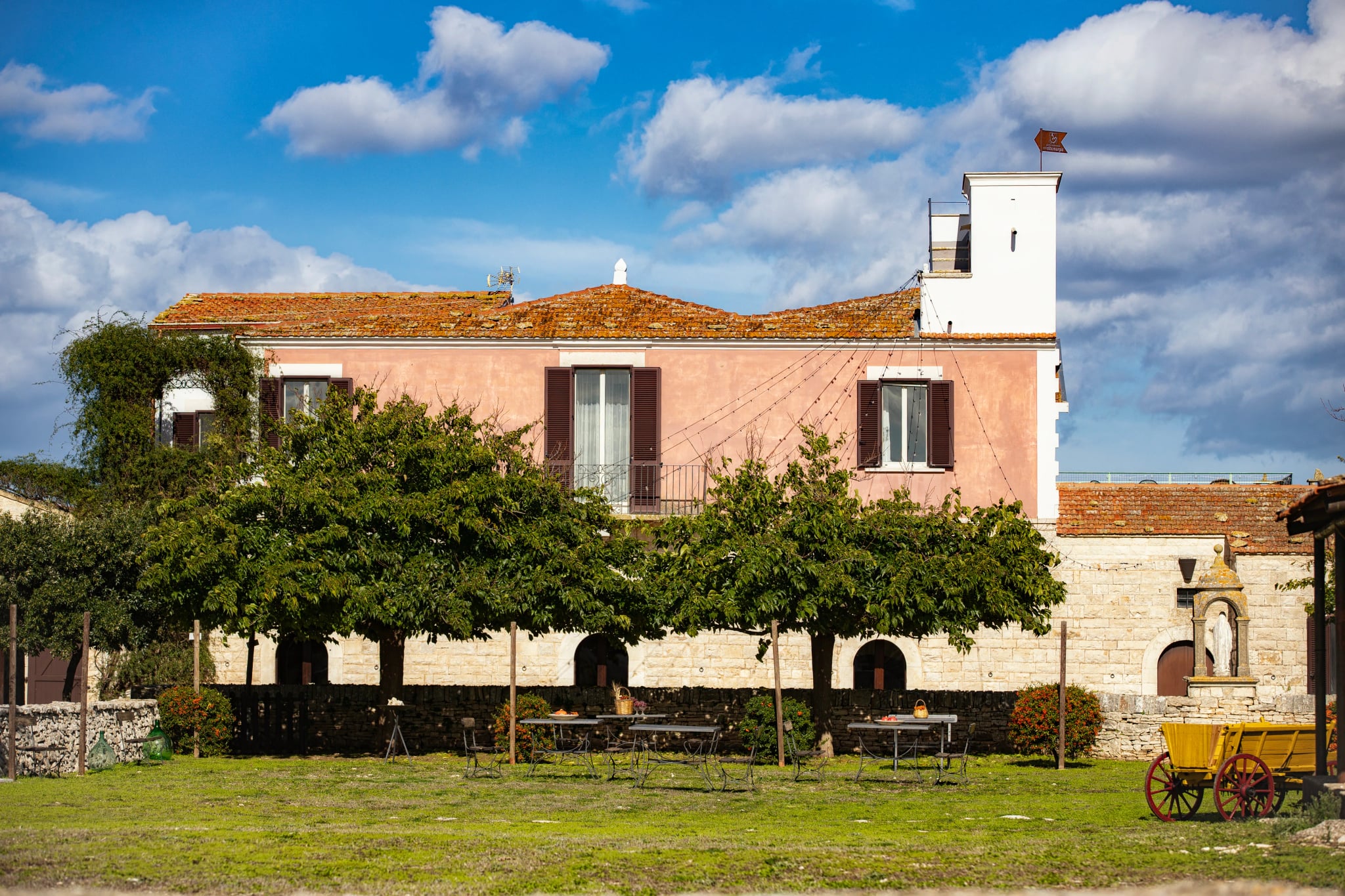
A Masseria San Magno already existed in 1753, but the current structure was born in 1797, as evidenced by the inscription on the stone. At the center of it all was water: large roofs and cisterns were designed to collect and store it, making life and work on the plateau possible. Under those same roofs, up to fifty oxen found shelter, an indispensable workforce to make the arid and stony land fertile.
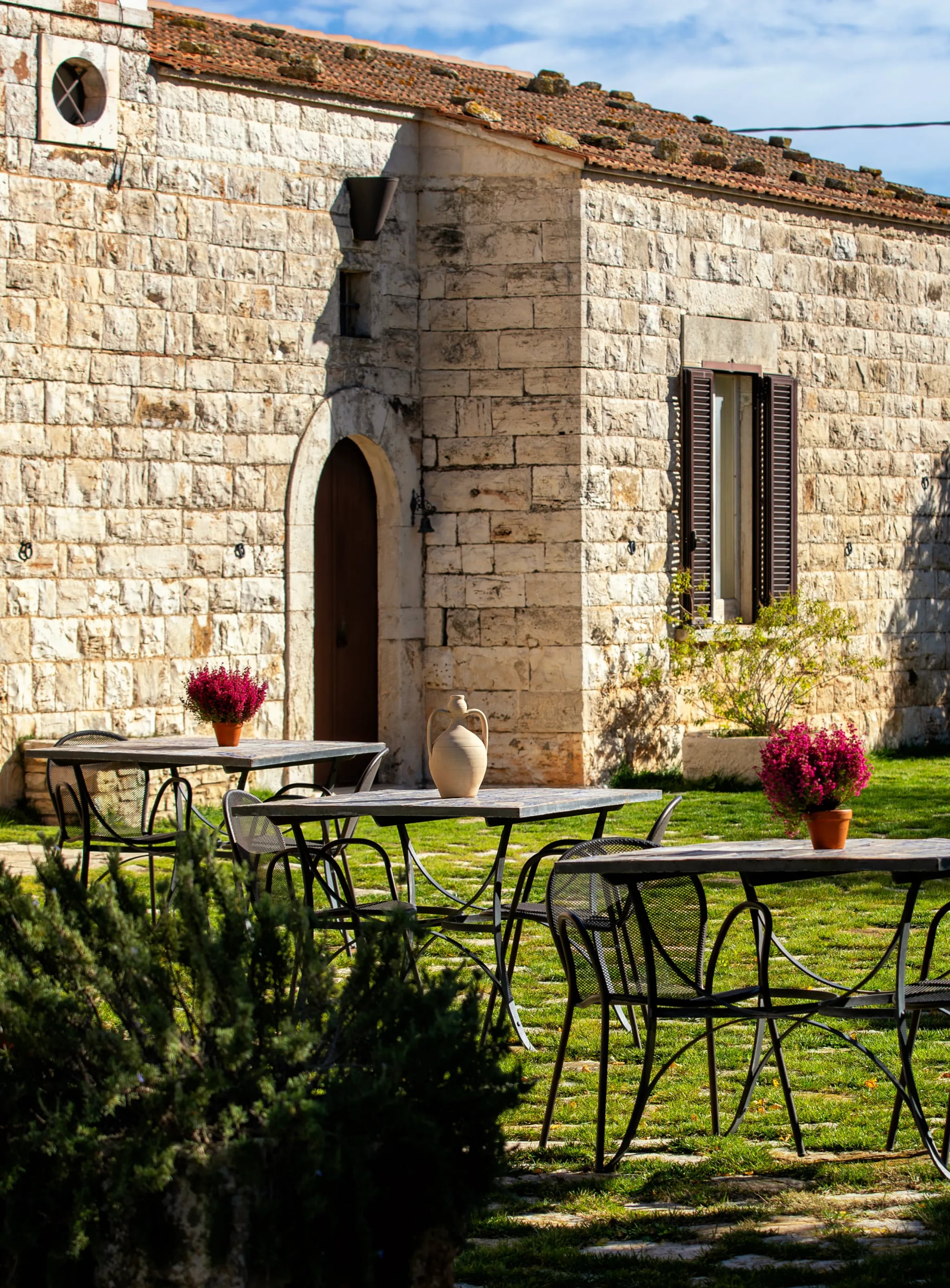
The stone, first an obstacle and then a resource, shaped the landscape and architecture: from the dry stone walls that still outline the countryside, to the walls, vaults, and structures of the masseria, built with locally quarried stone. A solid building, also designed to defend itself in a territory long traversed by banditry.
With the end of the feudal system, around 1830, the Cimadomo family was able to redeem the masseria and the land worked for generations. Since then, Masseria Cimadomo continues to live as an unbroken thread through time: a place where stone, water, and labor still tell a story of continuity, dedication, and belonging.